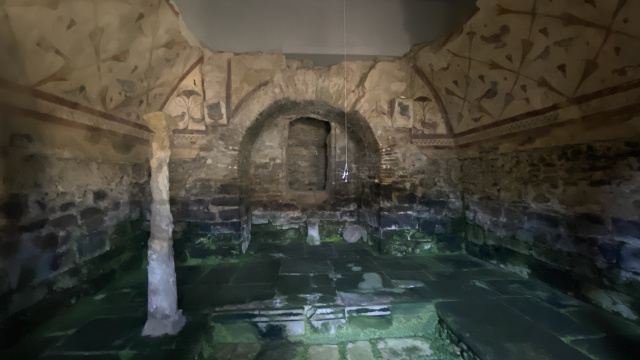
BIC Santa Eulalia de Bóveda
A unique monumental complex featuring ancient murals and a central pool, ideal for admiring late Roman architecture and granite reliefs.
In 1926, after centuries of being buried, an extraordinary late Roman monumental complex was discovered next to the parish church of Santa Eulalia, or Santalla de Bóveda, some 14 kilometres from Lugo; five years later, it was declared a National Monument.
Since then, a wide variety of hypotheses have been put forward regarding its original use, though no unanimous consensus has yet been reached. One of the most intriguing theories, though now considered highly implausible, is that it was a Priscillianist temple. What is certain is that it is a remarkable, and indeed unique, building, which appears to have no parallels, at least in the western half of the Roman Empire.
Generally speaking, the prevailing view is that it was a temple dedicated to some water-related deity, probably the nymphs, though this does not rule out a practical, protective function.
It is thought to have been built in the 3rd or 4th century. In later periods, the pagan site was Christianised and used as a church. From this second phase, some elements reminiscent of the Suebi and Visigothic periods remain.
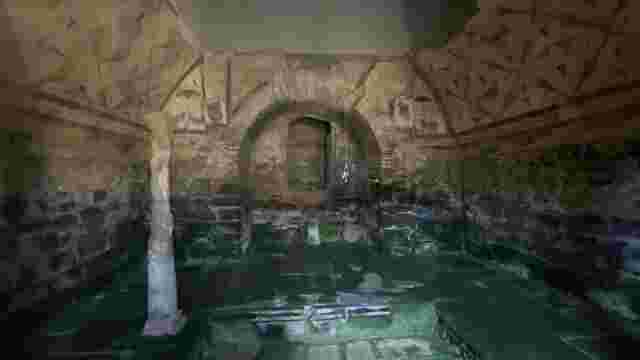
The original building, with an ‘in antis’ temple structure, had two storeys. Of the upper storey, only traces of the base of the vault remain, but the lower storey is almost entirely preserved. It has only one façade, as the temple was built by cutting into the slope of a small hill. Beneath a single vault, it is organised into three naves divided by arcades, with a rectangular niche or apse at the rear; in the central nave there is a basin that collected water from the spring. The paintings on the vault are largely preserved, and their beautiful birds can be admired in almost all their splendour after nearly two millennia. The façade and portico were modified during the Christian period, but they retain some granite reliefs that are probably original.
The central hamlet of Santalla is also of great interest for its granite farmhouses and their layout.

Church of Santa María de Gondar
A charming Romanesque church with decorated archivolts and a rose window, set in picturesque rural surroundings, ideal for lovers of medieval art.

Church of Santa María de Bascuas
A Romanesque church set in picturesque countryside, with an austere façade and bell tower, offers peace and contemplation amidst nature.

Church of Saint Martin of Carballido
A Romanesque church with stone walls, frescoes and wood carvings, set in peaceful rural surroundings, ideal for reflection and appreciating history.
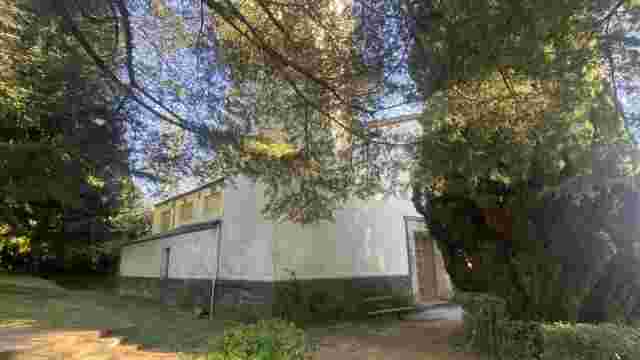
Church of St James the Apostle in Castelo
It is notable for its Romanesque style, sculpted capitals and ancient frescoes, and stands as a testament to the region’s historical and cultural heritage.

St Peter’s Gate
An ancient Roman gate with a medieval history, rebuilt in 1781, which offers tourists a glimpse into the area’s history and culture.

Church of Santiago, A Nova
Situated on a traditional street, it stands out for its 20th-century neoclassical façade, the result of urban redevelopment. Ideal for history lovers.
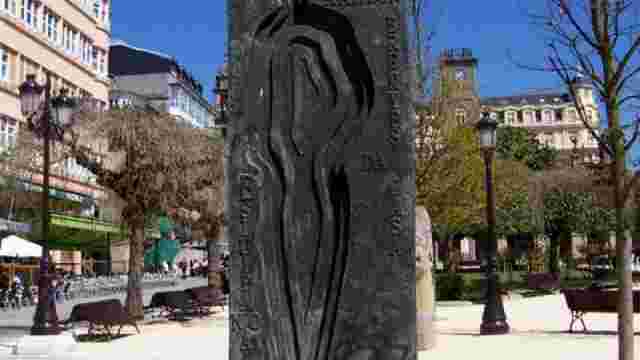
Monument to the poet Pimentel
An evocative sculpture in an urban setting that invites reflection and poetic enjoyment, ideal for contemplating and appreciating the literary cultural herit...
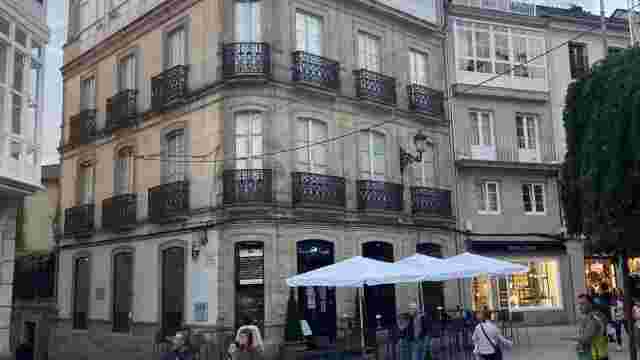
Birthplace of Luis Pimentel
A cultural venue celebrating Galician poetry, featuring events and exhibitions, offering an insight into the poet’s historical and literary world.

Santa María Square
A historic area with a Romanesque and Gothic cathedral, surrounded by old buildings, ideal for exploring cobbled streets and soaking up the medieval atmosphere.

Bishop’s Palace
A Baroque building with elements of a Gothic palace; its balcony and coats of arms are particularly striking. It is situated opposite a cathedral in a pictur...
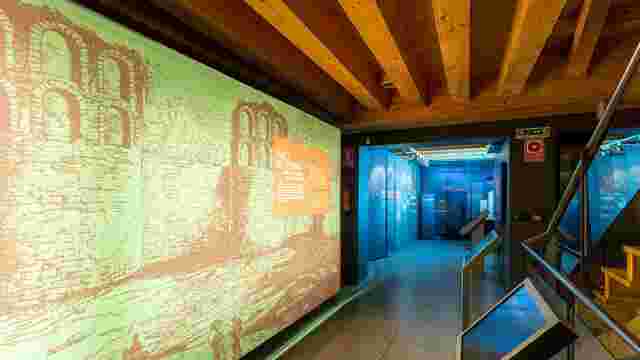
El Muro Interpretation Centre
It offers a journey through time using advanced audiovisual technology in a Baroque house, situated at the heart of Roman history.
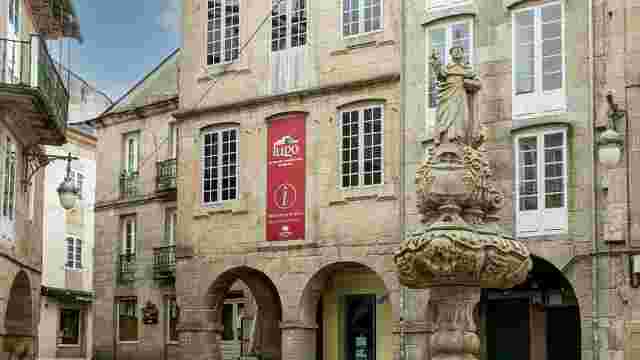
PLAZA DO CAMPO AND THE MIÑO NEIGHBOURHOOD
A triangular square featuring Baroque architecture, a central fountain and medieval streets. Ideal for exploring local history and culture.

Orbán’s palace
A Baroque palace featuring a coat of arms displaying the crests of noble families, completed in 1769, and the perfect place to admire historic architecture a...
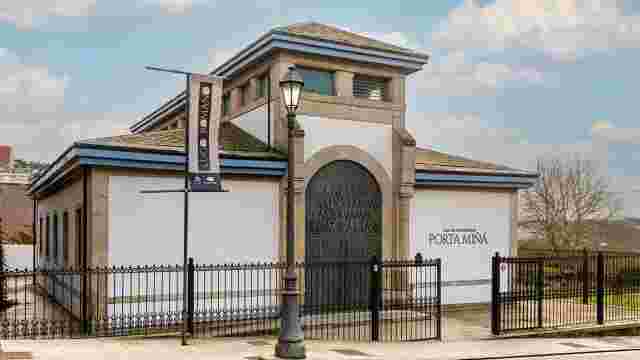
Miñá Gate
An exhibition on Roman Lugo, housed in a former abattoir, offers a journey through history with photographs, maps and archaeological artefacts along the Way ...
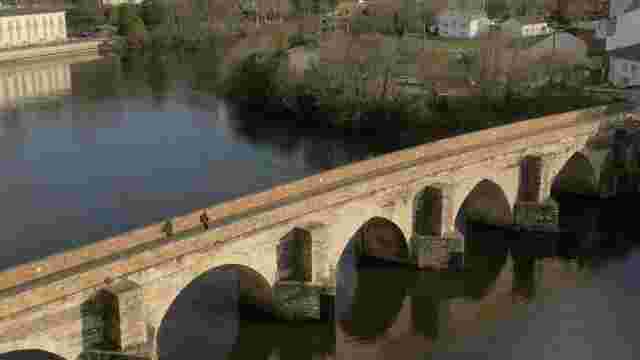
Roman bridge
A historic bridge with Roman foundations, forming part of the Primitive Way to Santiago, offers a picturesque route from the city walls to the River Miño.

Church of San Xoán de Alto
A Romanesque church situated on high ground, offering panoramic views and historic ornamental details, attracting lovers of cultural heritage.

Church of San Vicente de Burgo
An example of Romanesque architecture featuring a single nave, a semicircular apse and medieval sculptural details, ideal for lovers of cultural heritage.

Church of San Martiño de Poutomillos
A medieval church featuring Romanesque architecture and a bell tower, the perfect spot to admire and enjoy the scenery in a picturesque rural setting.
BIC Santa Eulalia de Bóveda
A unique monumental complex featuring ancient murals and a central pool, ideal for admiring late Roman architecture and granite reliefs.

Church of Santa Eulalia in Bóveda
A Roman monument featuring unique early Christian frescoes and underground architecture, bearing witness to the cultural and religious transition of antiquity.