Historic Center

Plaza Mayor
Situated in the symbolic and bustling city centre, it stands out for its Baroque architecture, arcades, towers and monuments, making it a key attraction for ...
The Town Hall is situated at one end of the Praza Maior and is regarded as one of the most important examples of Galician civil Baroque architecture. It was designed by Lucas Ferro Caaveiro and built in 1738. It comprises two storeys: the ground floor features arcades defined by ten strong semicircular arches – eight at the front and two at the sides – whilst the first floor has two large balconies supported by beautiful corbels.
The façade is symmetrically divided by a central pilaster which serves as a visual support for the large royal coat of arms that presides over it; at either end are two small square towers, and beneath them, forming the corners, is the city’s coat of arms, all carved from finely worked granite. The clock tower was added in 1871.
The Praza Maior was established in the 19th century, following the Confiscation of Church Property and the abolition of the episcopal lordship, to emphasise the City Council’s leading role during the liberal era, and today it remains the symbolic and vital centre of the city. Notable among its buildings are the Círculo de las Artes, the former Seminary of San Lorenzo (now a Franciscan school), the porticoed houses, the bandstand and the monument to Luís Pimentel, Lugo’s great poet.

Church of San Froilán
A Baroque church with a barrel vault and a central dome, it is notable for its façade featuring a coat of arms and a statue of Saint Raphael, flanked by eleg...

False door
A secondary entrance to the Roman walls, offering a unique perspective on the historical and architectural heritage – ideal for exploring off the beaten track.

New door
A gate of Roman origin, rebuilt in 1900, it is notable for its historic architecture and its connection to the ancient Via XX. Ideal for history lovers.

Bishop Odoario’s Door
This historic gateway, designed by Ramiro Sainz, provides a unique link to the Hospital de Santa María and forms part of a National Monument.

Bishop Aguirre’s Gate
This historic entrance, designed by Nemesio Cobreros, leads to the seminary and an old cemetery, offering a unique architectural and cultural experience.
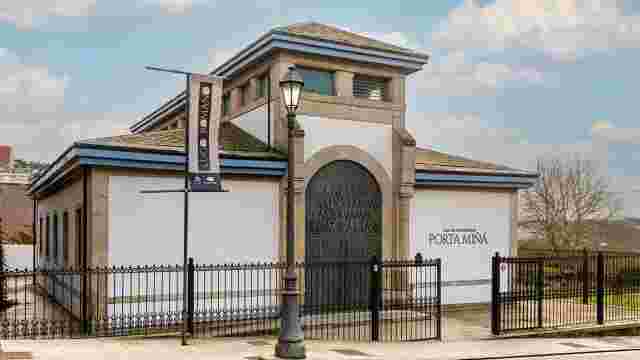
Miñá Gate
An exhibition on Roman Lugo, housed in a former abattoir, offers a journey through history with photographs, maps and archaeological artefacts along the Way ...

Orbán’s palace
A Baroque palace featuring a coat of arms displaying the crests of noble families, completed in 1769, and the perfect place to admire historic architecture a...
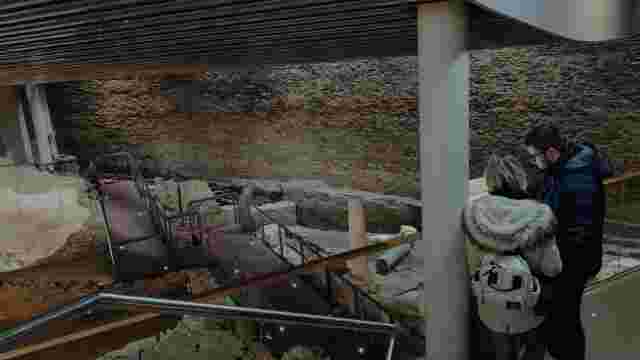
House of Mithras
A unique archaeological site featuring the remains of a Roman house and a temple dedicated to Mithras, with murals and the architecture of the ancient Lucus ...
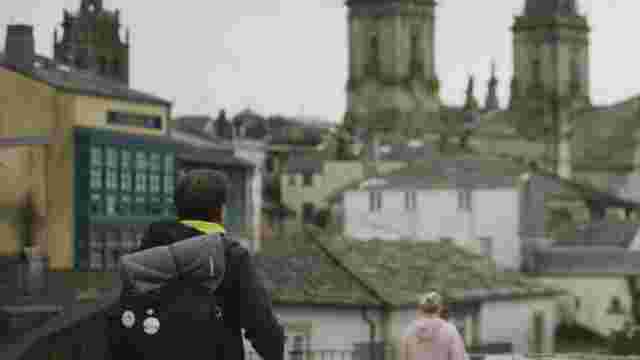
Roman Wall of Lugo
An impressive Roman fortress with a perimeter of over 2 km, crowned by semi-circular towers. A World Heritage Site, it offers unique views.

Santiago Gate
A historic gate of Roman origin, renovated in 1759, it is notable for its coat of arms and the image of St James, and forms part of the Primitive Way.

Plaza Mayor
Situated in the symbolic and bustling city centre, it stands out for its Baroque architecture, arcades, towers and monuments, making it a key attraction for ...

Bishop’s Palace
A Baroque building with elements of a Gothic palace; its balcony and coats of arms are particularly striking. It is situated opposite a cathedral in a pictur...
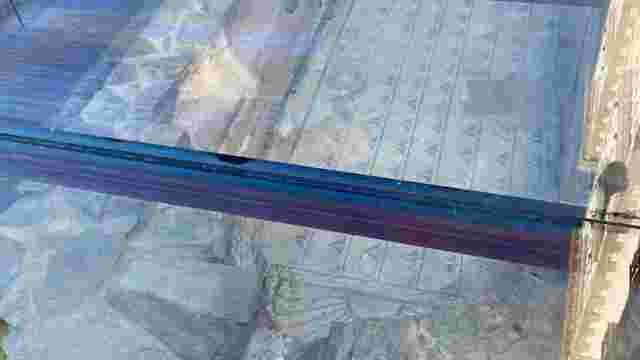
Roman Baths
A remarkable Roman ruin featuring original mosaics, right in the heart of Lugo’s historic centre.

Santa María Square
A historic area with a Romanesque and Gothic cathedral, surrounded by old buildings, ideal for exploring cobbled streets and soaking up the medieval atmosphere.
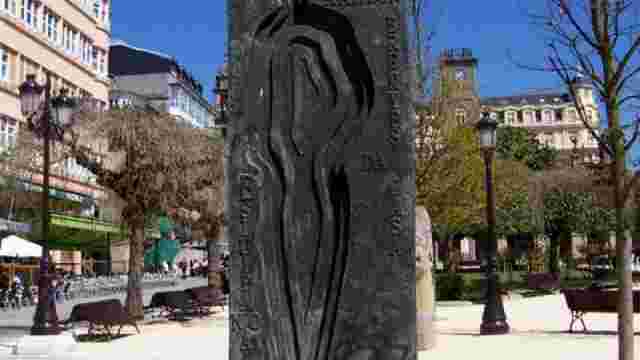
Monument to the poet Pimentel
An evocative sculpture in an urban setting that invites reflection and poetic enjoyment, ideal for contemplating and appreciating the literary cultural herit...
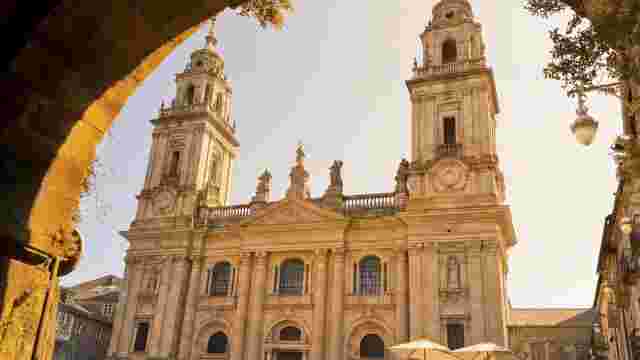
Lugo Cathedral
A Romanesque cathedral steeped in centuries of history and art, housing a valuable museum within its walls.
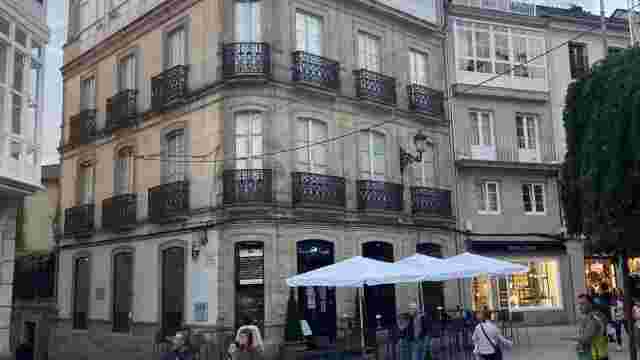
Birthplace of Luis Pimentel
A cultural venue celebrating Galician poetry, featuring events and exhibitions, offering an insight into the poet’s historical and literary world.

Church of Santiago, A Nova
Situated on a traditional street, it stands out for its 20th-century neoclassical façade, the result of urban redevelopment. Ideal for history lovers.
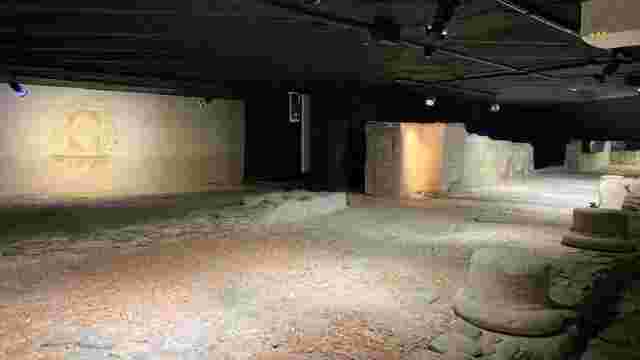
House of Mosaics
A Roman domus featuring original mosaics that shows how the noble families of Lugo used to live.

Church of Santo Domingo
A Gothic church with a Latin cross plan, polygonal apses and ribbed vaults. Its dome and the south façade, with its Baroque decoration, are particularly note...

Church of St Peter
A gem of the Mendicant Gothic style, with a Latin cross plan, polychrome stained-glass windows and polygonal apses. Listed as a Historic-Artistic Monument si...
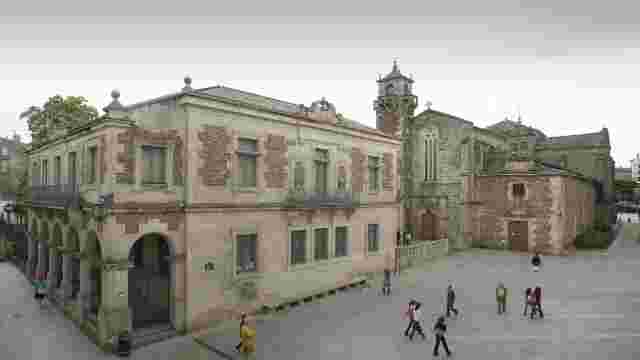
Provincial Museum of Lugo
An archaeological museum featuring pre-Roman art, a Romanesque cloister and the remains of a Franciscan convent. Ideal for lovers of history and art.
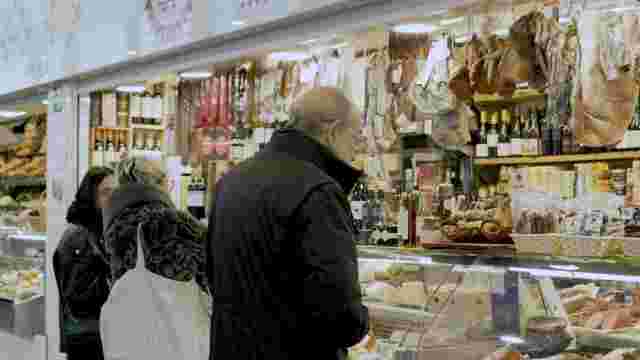
Food Market
A traditional market offering local cuisine and Roman ruins alongside Gothic architecture.
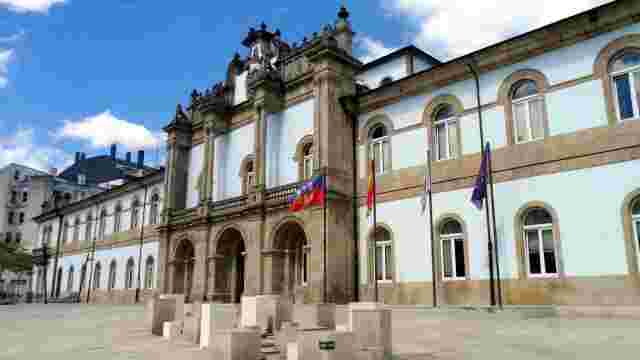
Provincial Council Building
A historic two-storey building with a symmetrical façade in the classical style and a back garden featuring magnolias, situated next to the Roman wall.

Station entrance
Designed by Luciano Travadelo, this historic gateway enhances the link between the town centre and the station, whilst serving as an architectural attraction...
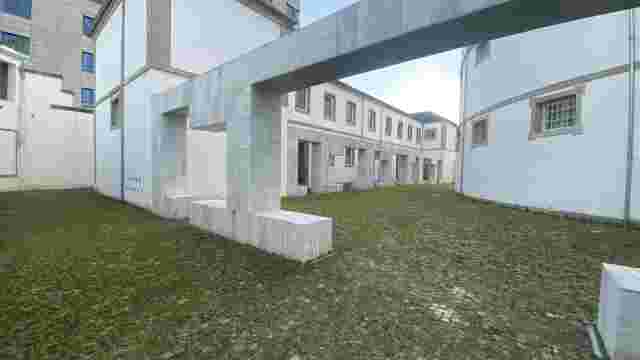
Old Prison Cultural Centre
A unique cultural venue that blends the historic architecture of a former prison with modern facilities for exhibitions and creative events.

Constitution Square
An iconic venue with historic architecture, a welcoming atmosphere, café terraces and proximity to monuments, ideal for cultural and social events.